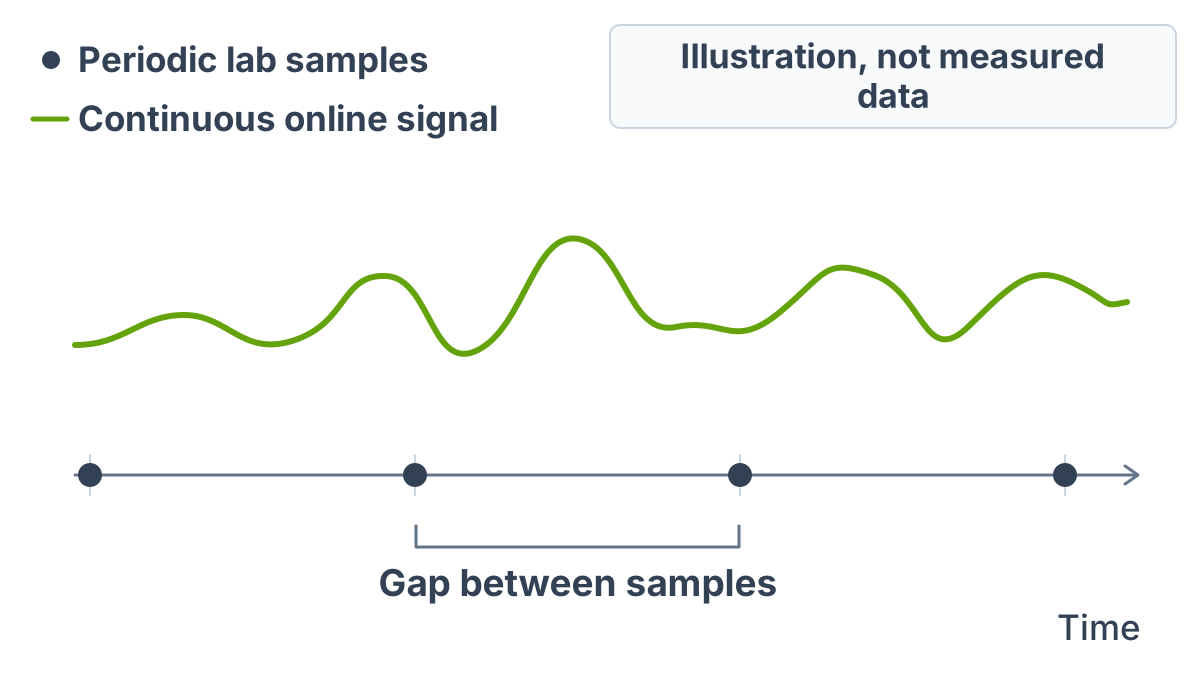
Treating BactoSense ID’s under-60-minute counts as compliance results is the wrong use in the US, because permit reports still need an approved test method. bNovate’s new online analyzer is best read as a process signal between lab samples: bNovate says it counts coliforms and enterococci today and lists E. coli as coming soon.
If you are weighing an online bacteria monitor for a wastewater, reuse or bathing-water site, BactoSense ID is a vendor-announced flow cytometry analyzer that bNovate says identifies and counts coliforms and enterococci in under 60 minutes, against 18 to 72 hours for lab culture. bNovate itself positions it as a complement to, not a replacement for, regulatory testing. In the US, 40 CFR 136.1 requires the approved Part 136 procedures (or an approved alternate procedure) for NPDES permit measurements, and we found no such approval for this analyzer as of 7 October 2026.
Everything about the product comes from bNovate’s own pages; the trade-press report repeats the same release. This is an independent publication; see about this site.
What did bNovate announce?
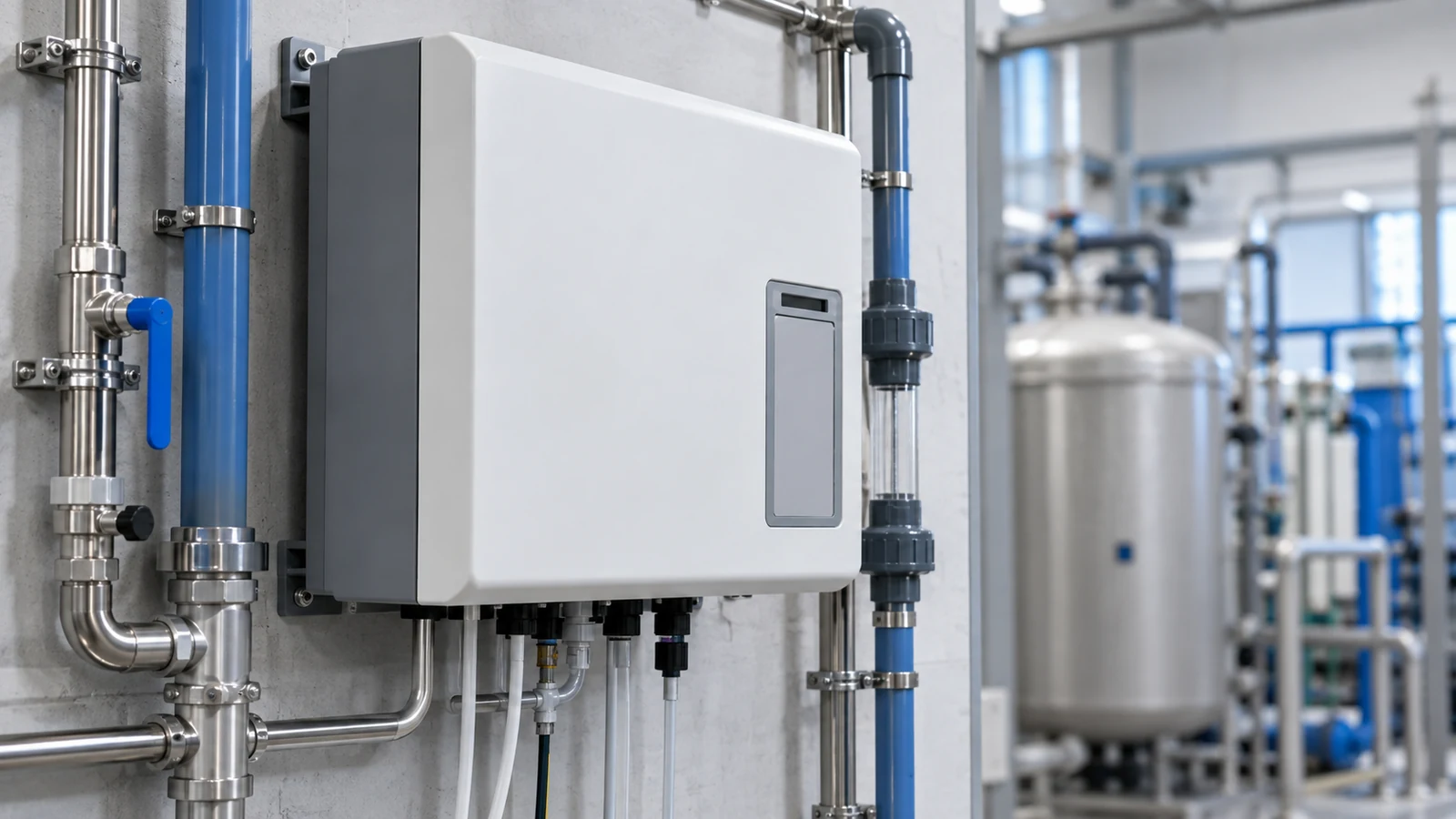
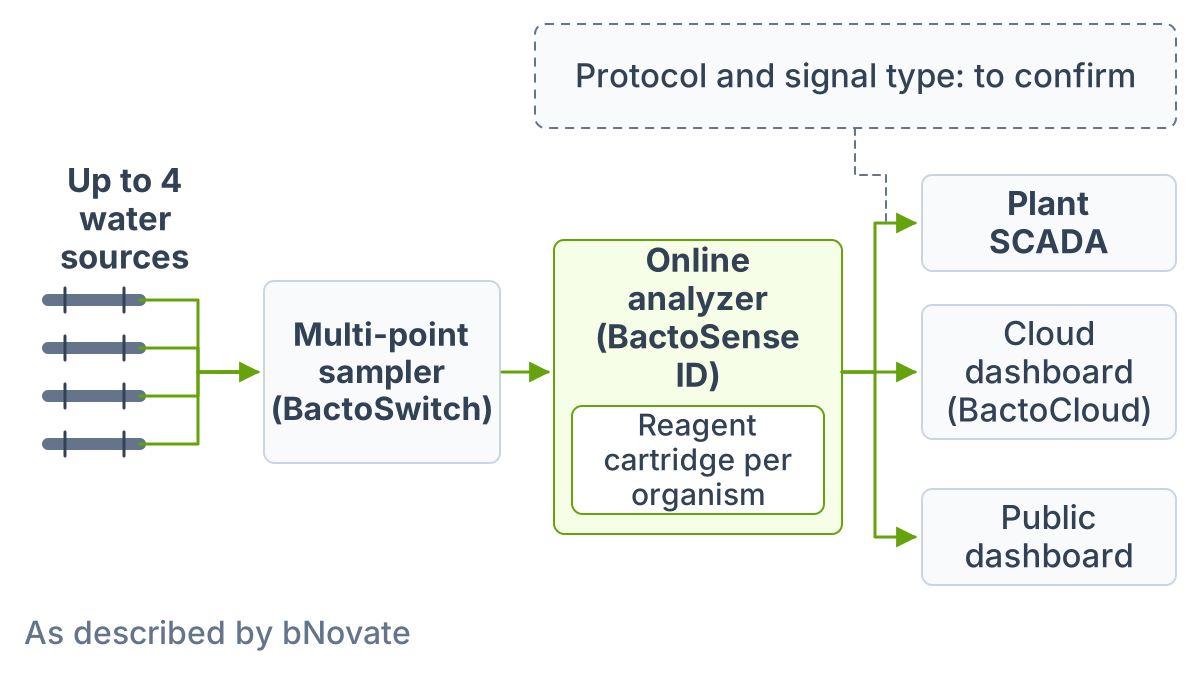
bNovate Technologies, based in Switzerland, announced BactoSense ID, a continuous, automated microbial monitor for wastewater discharge, water reuse and bathing waters. It is built on the company’s flow cytometry platform and uses swappable reagent cartridges, each specific to one indicator organism.
| Event | Date | Source | Nature of source |
|---|---|---|---|
| Announcement post on bNovate’s site | Dated 29 September (year not shown on the page) | bNovate | Vendor release |
| Trade-press report “bNovate launches BactoSense ID” | 5 Oct 2026 | Instrumentation Monthly | Same release, not an independent check |
| Product page with FAQ and claims | Read 7 Oct 2026 | bNovate | Vendor page |
Takeaway: Date your evaluation from bNovate’s own pages, and treat the press report as the same source.
Which vendor claims can you verify?
Everything about the product is bNovate’s own description; what you can verify today is what its documents actually say and where they disagree. Performance and benefit statements come without independent data in the pages reviewed. The table separates the three layers.
| Topic | bNovate claims | What bNovate’s documents actually say | Still to check |
|---|---|---|---|
| Speed | Results in under 60 minutes vs 18–72 h for lab tests | Stated on announcement and product page | Time to result on your water, with your sample handling |
| Organisms | Coliforms, enterococci and E. coli | E. coli “will be available soon” (editor’s note; product FAQ) | Release date for the E. coli cartridge |
| Method basis | Inspired by ISO 9308-1 / ISO 7899-2 | Product page says “inspired by”, not certified to | Any third-party method comparison |
| Role | Complements, does not replace, regulatory testing | Product FAQ answers “No” to replacing official testing | — |
| Field example | 20-fold rise in coliform count within 4 h after heavy rain at a Swiss plant | Vendor anecdote; no data in the pages reviewed | Plant name, data, method comparison |
| Savings | Less electricity and chemical use by dosing to actual counts | No figures given | Your own trial data |
| Detection of stressed cells | Picks up organisms that culture tests miss | Vendor statement | Comparison against your lab |
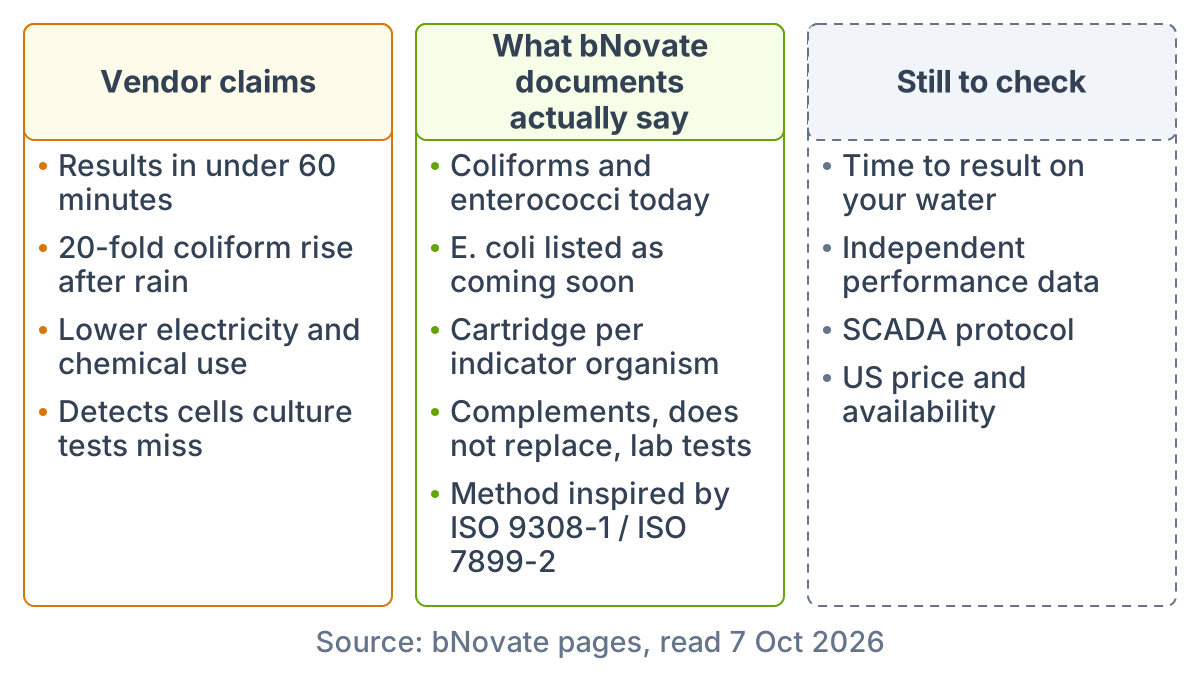
The announcement’s headline list includes E. coli, while its own editor’s note and the product page say E. coli detection is coming soon.
Common mistake: Quoting “E. coli in under 60 minutes” from the headline. On 7 October 2026, bNovate’s own pages list E. coli as coming soon.
Takeaway: Put the speed, field example and savings statements into a pilot test plan rather than a business case.
How would it fit a SCADA-connected plant?
bNovate says the analyzer connects directly to SCADA and to its BactoCloud service, can feed public dashboards, and can sample up to four water sources through its BactoSwitch unit, for example before and after a treatment step. It does not state the protocol or signal type on the pages we read.
| Integration question | Why it matters | What to ask for |
|---|---|---|
| Which protocol or signals reach SCADA? | Decides the I/O card, driver or gateway | Interface specification |
| Is cloud connection required for operation? | Network security review | Architecture and data-flow document |
| How are alarms and cartridge status reported? | Operator response and maintenance planning | Tag list or register map |
| How are four BactoSwitch sources tagged? | Pre/post treatment data must not be mixed | Sequencing and tagging description |
For how analyzer outputs typically reach a control system, compare the answer you get against the interface and protocol table in our industrial IoT sensor guide; its security baseline questions apply to any cloud-connected analyzer.
Takeaway: Get the interface specification before the pilot, so the data land in SCADA with the right tags.
Where does it sit in US compliance?
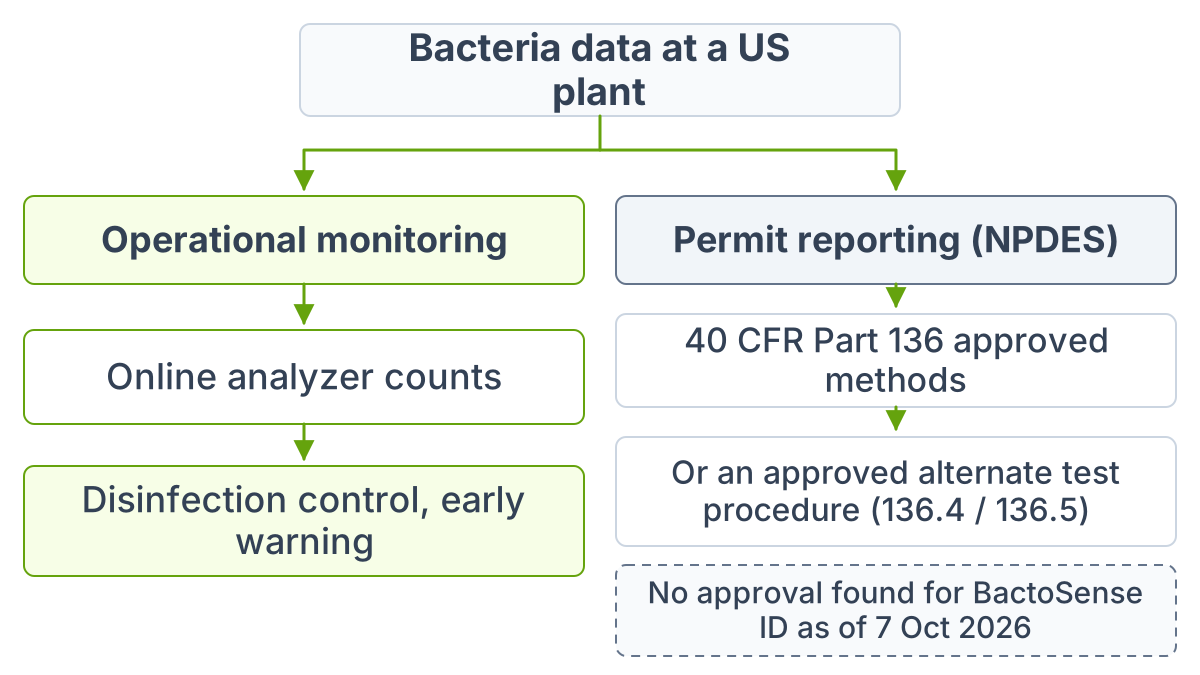
In the US, the analyzer’s counts are operational data unless a regulator approves the method. Permit reporting under NPDES uses the test procedures in 40 CFR Part 136, and a new method needs approval as an alternate test procedure, either nationwide (136.4) or for limited use through the state permitting authority and EPA region (136.5).
| US rule or guidance | What it says | What it means for BactoSense ID |
|---|---|---|
| 40 CFR 136.1 | Part 136 procedures must be used for NPDES applications and reports, except as provided in 136.4–136.6 | Permit results still come from approved methods |
| 40 CFR 136.4 / 136.5 | Alternate test procedures can be approved nationwide or for limited use | The route a new method would need; no approval found for this analyzer |
| EPA 2012 Recreational Water Quality Criteria | Recommended criteria use E. coli and enterococci; states adopt their own standards | Enterococci counts are relevant; E. coli awaits the cartridge; state rules apply |
| EU Bathing Water Directive | bNovate cites it: as few as four official tests per season | EU context only; not a US requirement |
Air-side continuous monitors face a comparable document test; our QX1400 explainer notes that a CEMS analyzer must also meet EPA performance specifications.
Common mistake: Citing ISO 9308-1 or ISO 7899-2 as proof of regulatory acceptance. bNovate says its method is inspired by those standards, and US permit reporting follows Part 136, not ISO references.
Takeaway: Keep your permit sampling and lab methods unchanged, and ask your permitting authority before using any online count in a report.
Who is affected?
US operators and engineers who want earlier warning of bacterial changes are the readers who need to act; for compliance teams, the announcement does not change the required test methods.
| Reader | Impact | Basis |
|---|---|---|
| Wastewater plant operators | A candidate process signal for disinfection control | bNovate claims; 40 CFR 136 |
| Water reuse project teams | Pre/post treatment monitoring with one analyzer via BactoSwitch | bNovate product page |
| Beach and recreation monitoring agencies | Enterococci now; E. coli later; state criteria govern advisories | EPA RWQC page; bNovate FAQ |
| Instrument and automation engineers | Interface and network questions to settle; see the output and network options | bNovate product page |
| Compliance and lab staff | Required methods unchanged; our suggestion is to help define how pilot data will and will not be used | 40 CFR 136.1 |
Takeaway: Name an owner for the pilot on the operations side and a reviewer on the compliance side.
When should you act?
As of 7 October 2026, the announcement and product page reviewed give no US availability, price or delivery time, so action now means gathering documents and designing a pilot.
| When | Action | Status |
|---|---|---|
| From 7 Oct 2026 | Download bNovate’s flyer and data sheet from the product page | Links available on the product page, read 7 Oct 2026 |
| Before a pilot | Get the SCADA interface, cartridge life, consumables, maintenance figures and delivery time | Not in the pages reviewed; confirm with the supplier |
| Pilot | Run alongside your lab method on the same samples and log differences | Your plan |
| When bNovate announces it | Check the E. coli cartridge release and its data | “Soon,” per bNovate; date needs checking |
| Before any reporting use | Ask the permitting authority about method acceptance | No approval found in our 7 Oct 2026 search |
Takeaway: Ask the permitting authority which comparison data it would want, then design the pilot around paired samples.
What is still uncertain?
Cost, interface, independent validation and regulatory acceptance are still open after the pages reviewed. Each item names who can close it.
| Open item | Who can confirm | What to ask for |
|---|---|---|
| US availability, price, consumable and maintenance cost | bNovate or its distribution partner | Written offer and cost breakdown |
| E. coli cartridge release date and performance data | bNovate | Release note and validation data |
| Independent performance data | bNovate; independent labs | Third-party comparison reports |
| Details of the Swiss rain-event example | bNovate | Data set and method comparison |
| SCADA protocol and cyber-security design | bNovate | Interface and architecture documents |
| Whether any US regulator accepts the data | State permitting authority; EPA region | Written guidance or ATP status |
No independent test of BactoSense ID was found in our searches on 7 October 2026.
Takeaway: Start the regulatory conversation early alongside the interface and cost questions.
When does this not apply?
This reading covers process monitoring at US wastewater, reuse and bathing-water sites; it does not cover:
- Drinking-water compliance monitoring.
- Sites that only need permit sampling with no process control use for faster counts.
- Jurisdictions outside the US, where other rules govern method acceptance.
- Pathogen testing beyond the indicator organisms bNovate lists.
Takeaway: Confirm your use case is process monitoring before investing time in an evaluation.
Our reading
BactoSense ID extends an existing flow cytometry platform, announced with a mix of specific configuration statements and broader benefit claims, all from bNovate. The configuration statements give you concrete questions: organism-specific cartridges, multi-point sampling, SCADA connection and an explicit “complement, not replace” position. The benefit claims, from the 20-fold rain event to energy savings, need your own paired data. As in the QX1400 certification explainer, the deciding factor for US use is a regulatory document rather than a specification. More sensor and acquisition articles are under sensors and DAQ, with plant-integration pieces under automation and instrument explainers under test and measurement.
Takeaway: Write the pilot plan so that its success criteria come from your data, not from the launch claims.
Related reading
Next reads for the integration and evaluation steps:
- Industrial IoT sensors — Check output types and networks before connecting a new analyzer.
- QX1400 certification explainer — Another case where documents, not headlines, decide use.
- profileGAUGE C.ODC specs — Read launch figures against the datasheet.
Takeaway: Read the interface guide before the supplier meeting.
Method and update log
Compiled on 7 October 2026 from bNovate’s announcement and product page, eCFR 40 CFR 136.1, 136.4 and 136.5, and EPA’s recreational water criteria and coliform rule pages; FAQ answers also use the IDEXX, North Kingstown and Rapid Microbiology pages listed in the sources. The Instrumentation Monthly report repeats bNovate’s release and counts as one source. We have not tested the analyzer. Last reviewed 7 October 2026.