 Sensors and DAQ
Strain Gage Accuracy Error Budget & Leadwire Guide
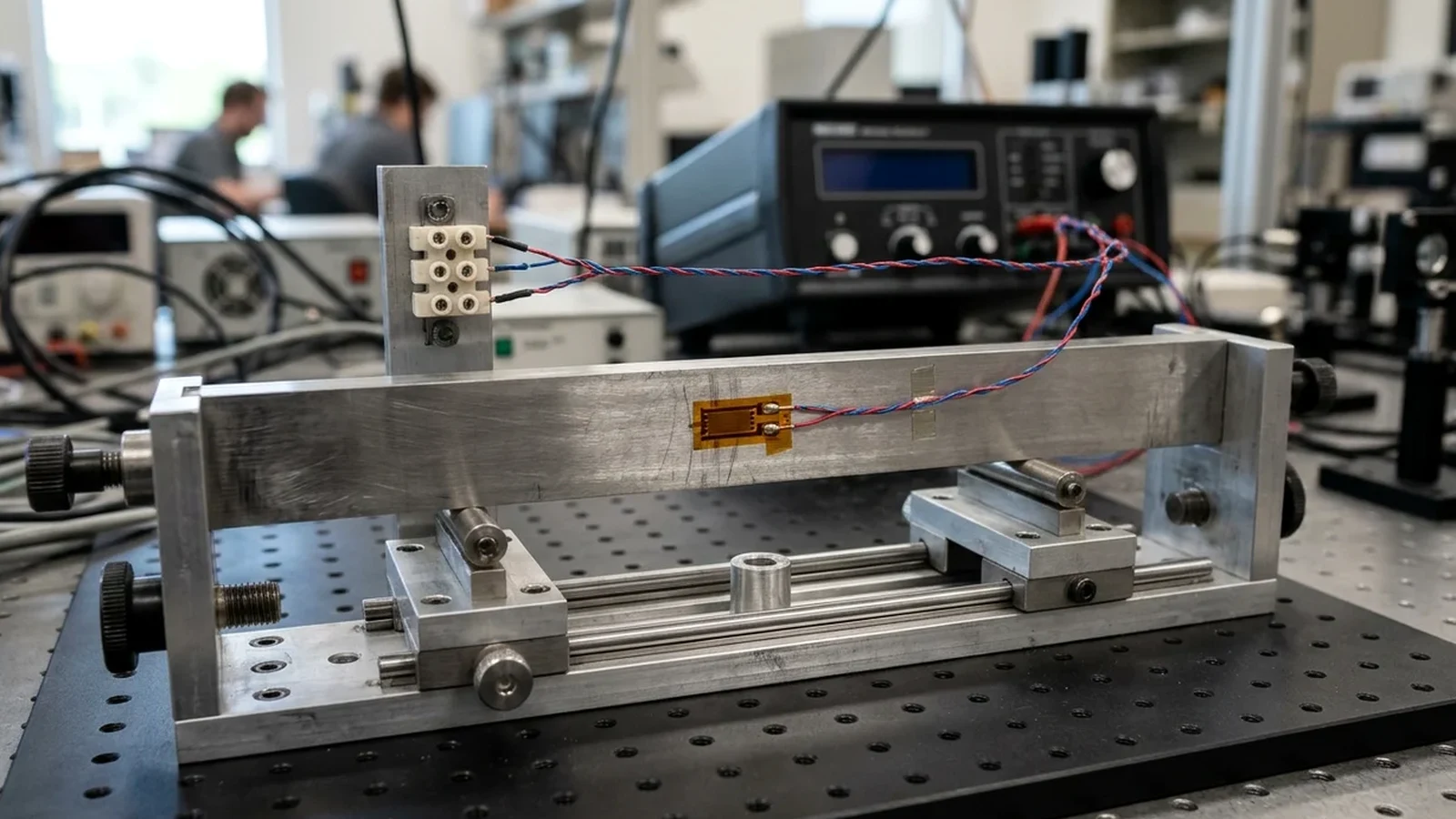
Under ASTM E251-20a, strain gage accuracy cannot exceed gage factor accuracy, while additive thermal output and leadwire resistance require compensation.
Technical articles and guides tagged with #wheatstone-bridge.
Sensors and DAQUnder ASTM E251-20a, strain gage accuracy cannot exceed gage factor accuracy, while additive thermal output and leadwire resistance require compensation.
 Sensors and DAQ
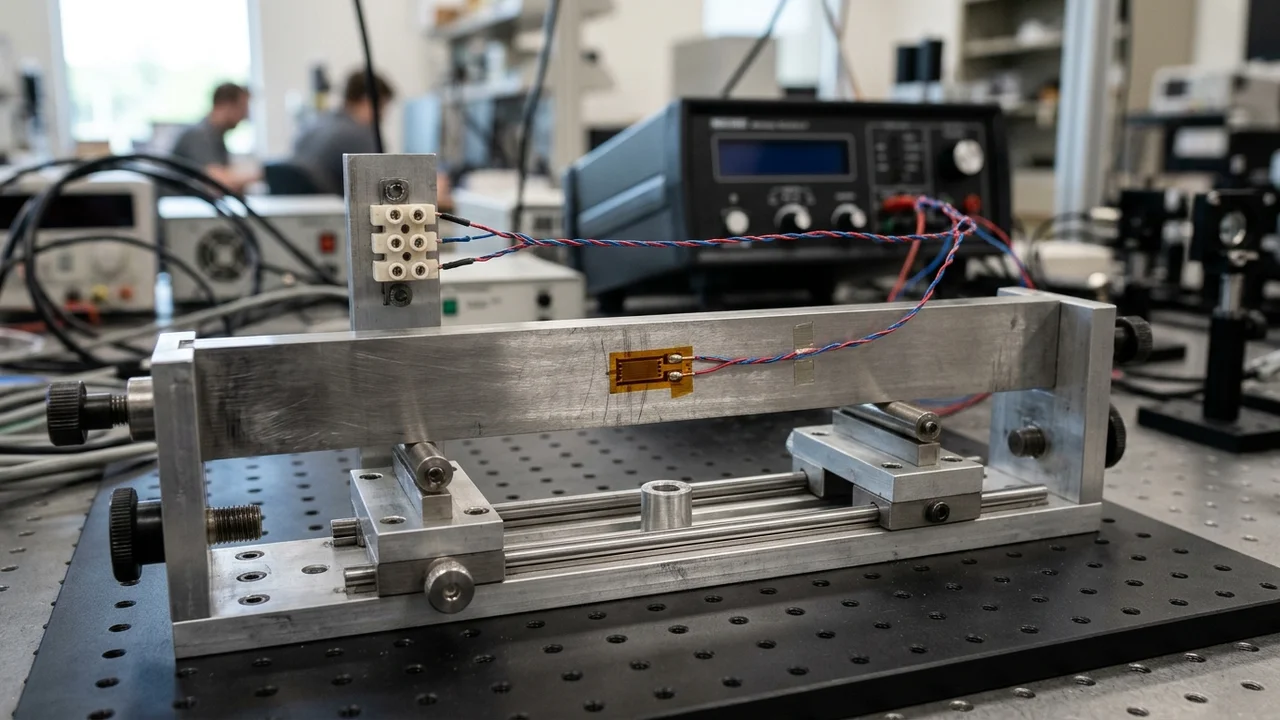
Calculate gauge-factor scaling from calibration on Poisson ratio 0.285, instrument and temperature rescaling, and transverse sensitivity corrections.
 Sensors and DAQ
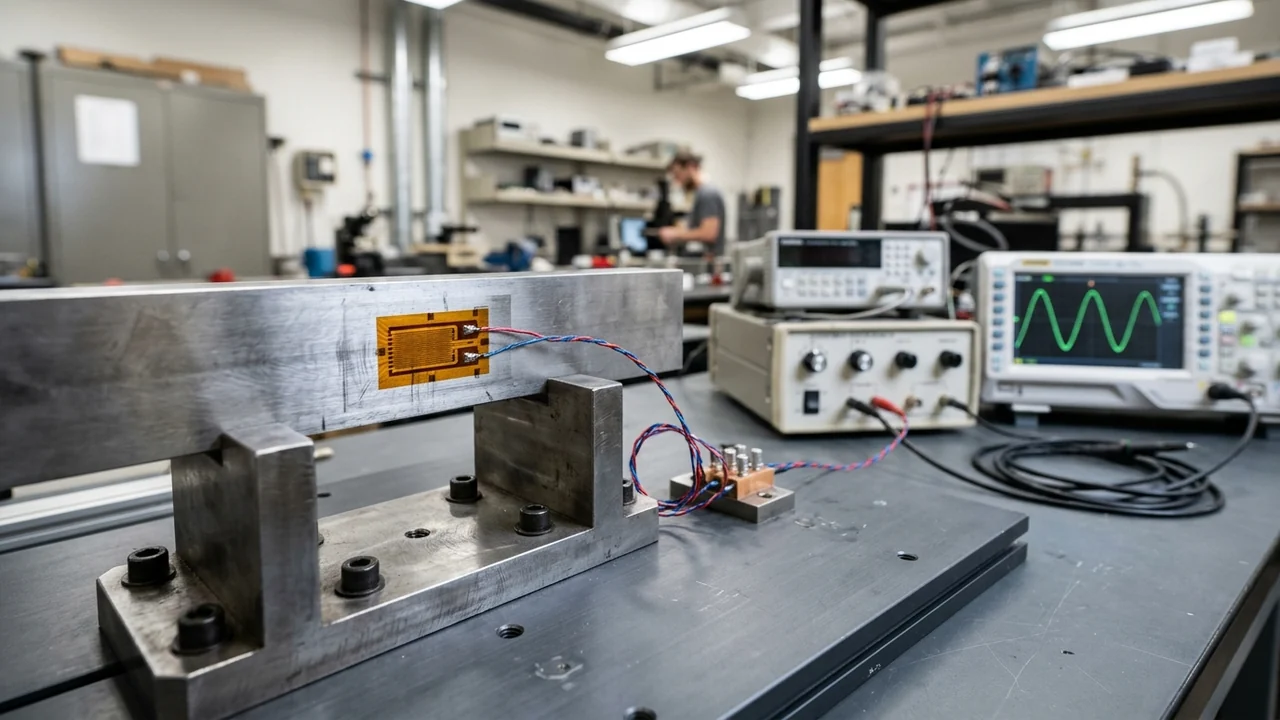
Compare dynamic versus static strain gauge measurement across monotonic microstrain range, cyclic S-N fatigue life, thermal output zero drift, and excitation limits.
 Sensors and DAQ
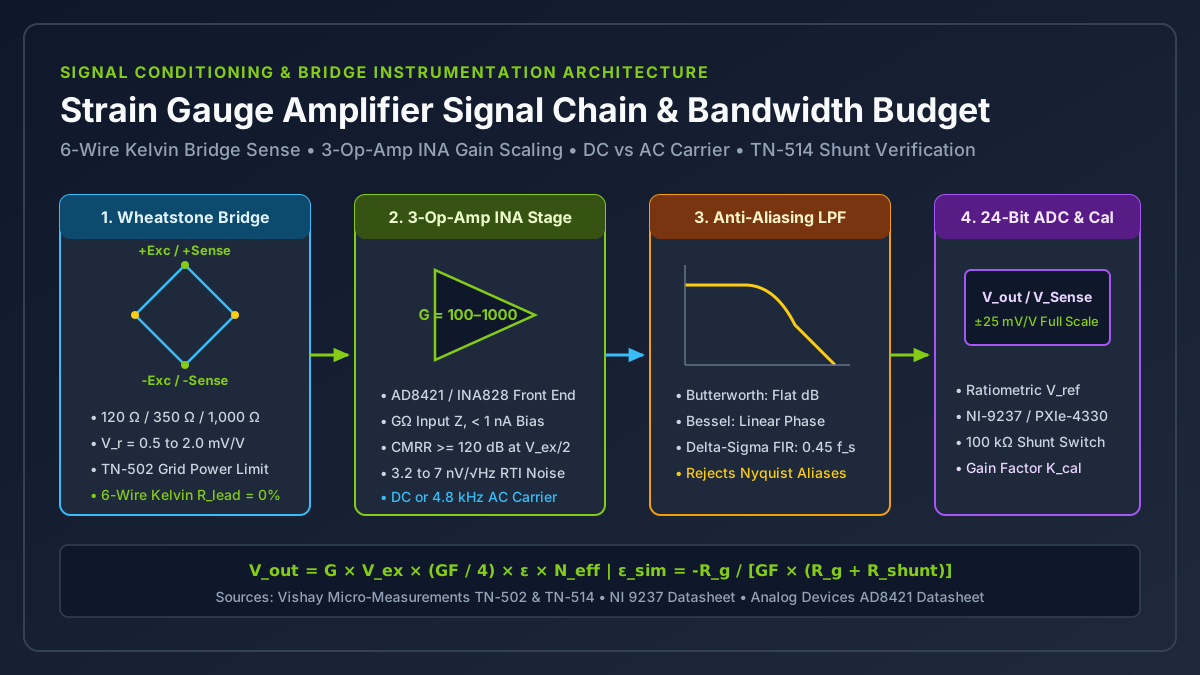
Size strain gauge amplifier gain, excitation power density, 6-wire Kelvin remote sensing, DC vs AC carrier demodulation, anti-aliasing filters, and shunt calibration.
 Sensors and DAQ
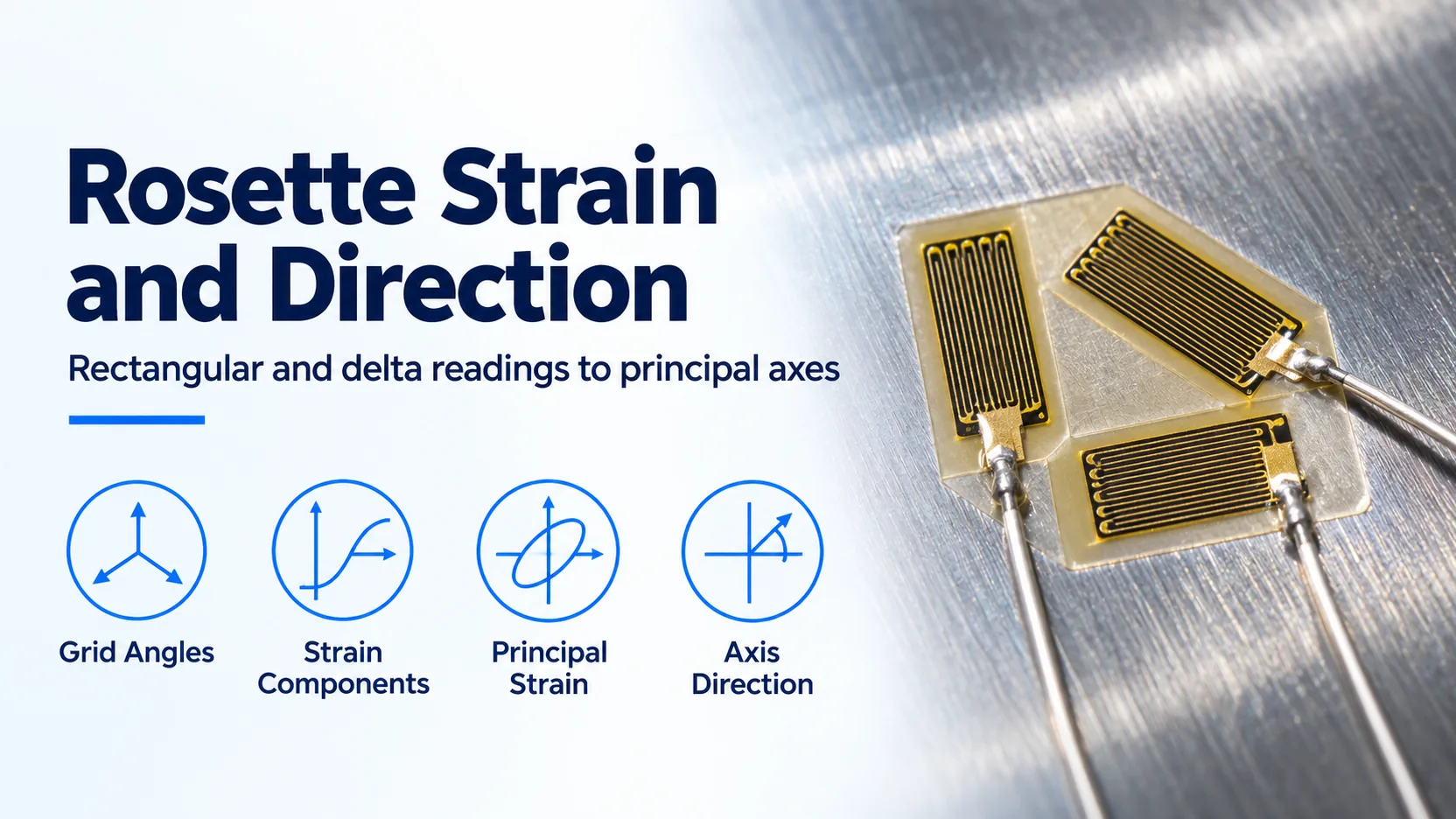
Compare rectangular 0°/45°/90° and delta 0°/60°/120° strain gauge rosettes, Cartesian-to-principal equations, ASTM E1561 limits, and bridge wiring checks.
 Sensors and DAQ
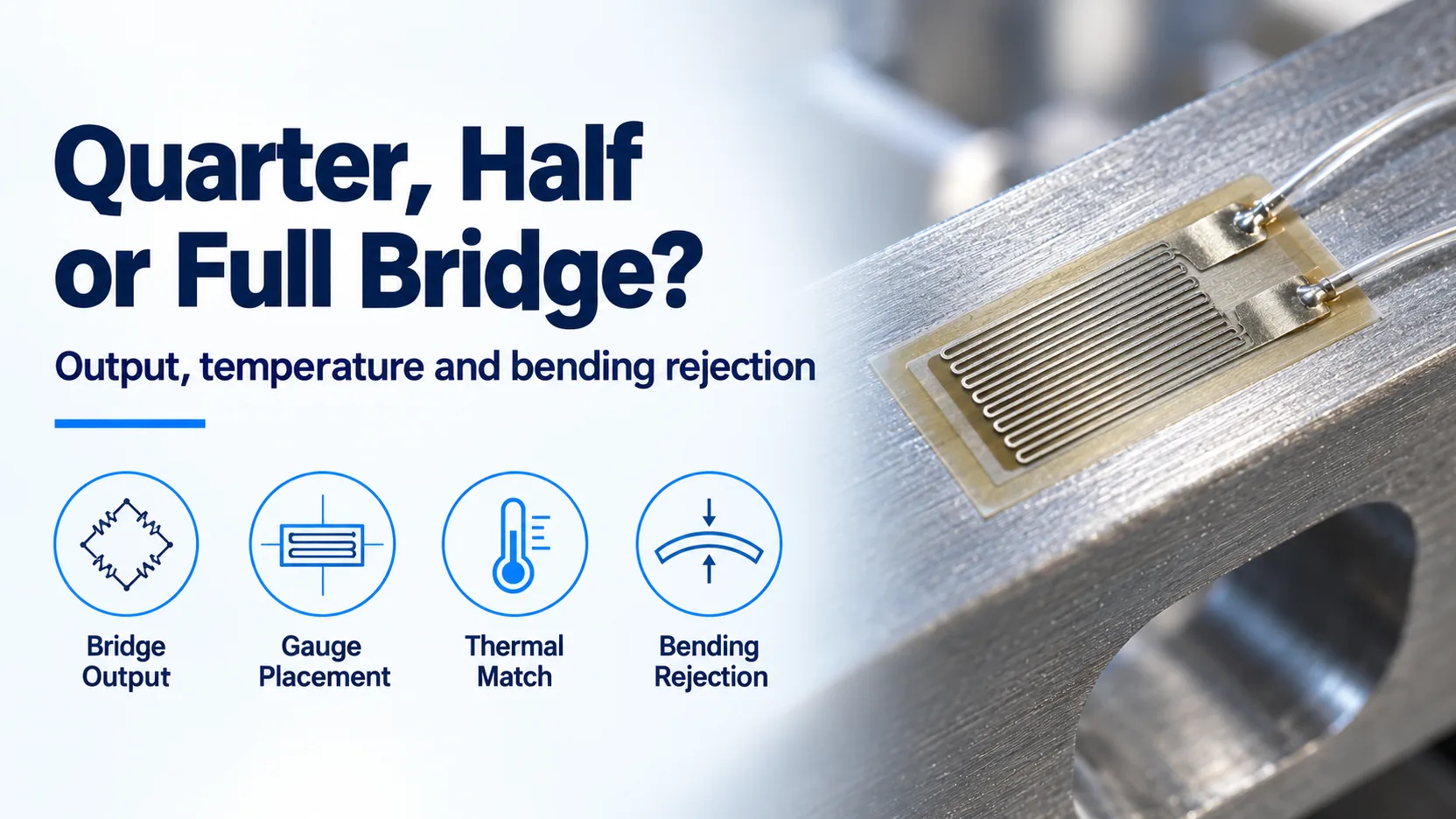
Compare quarter, half, and full strain gauge Wheatstone bridges by bridge factor, thermal cancellation, cable loss, and 350-ohm load cell wiring.
 Sensors and DAQ
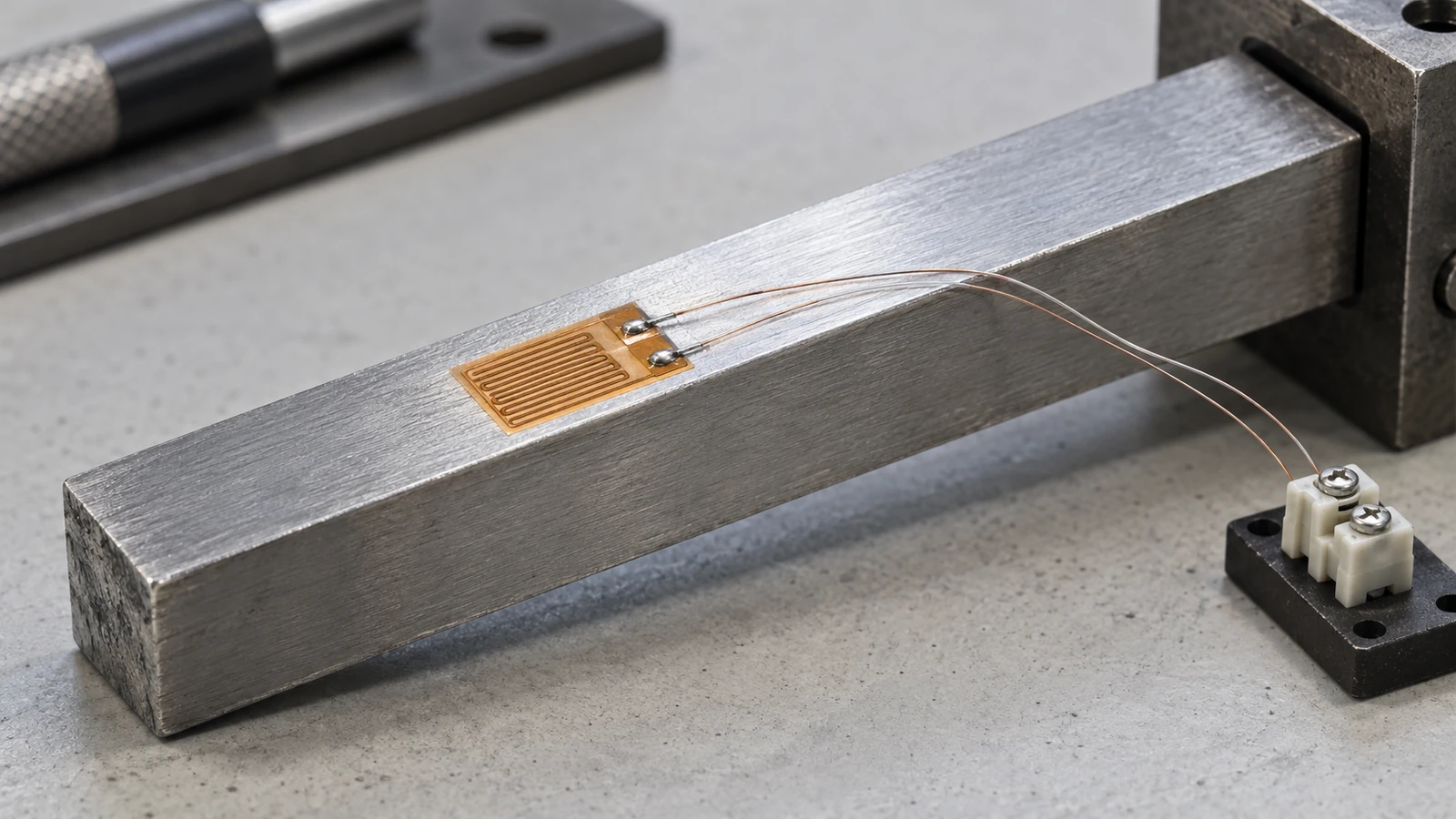
Learn what a strain gauge (strain gage) is, how it converts surface elongation into bridge voltage, gauge factor, rosette types, and key error controls.